Public art
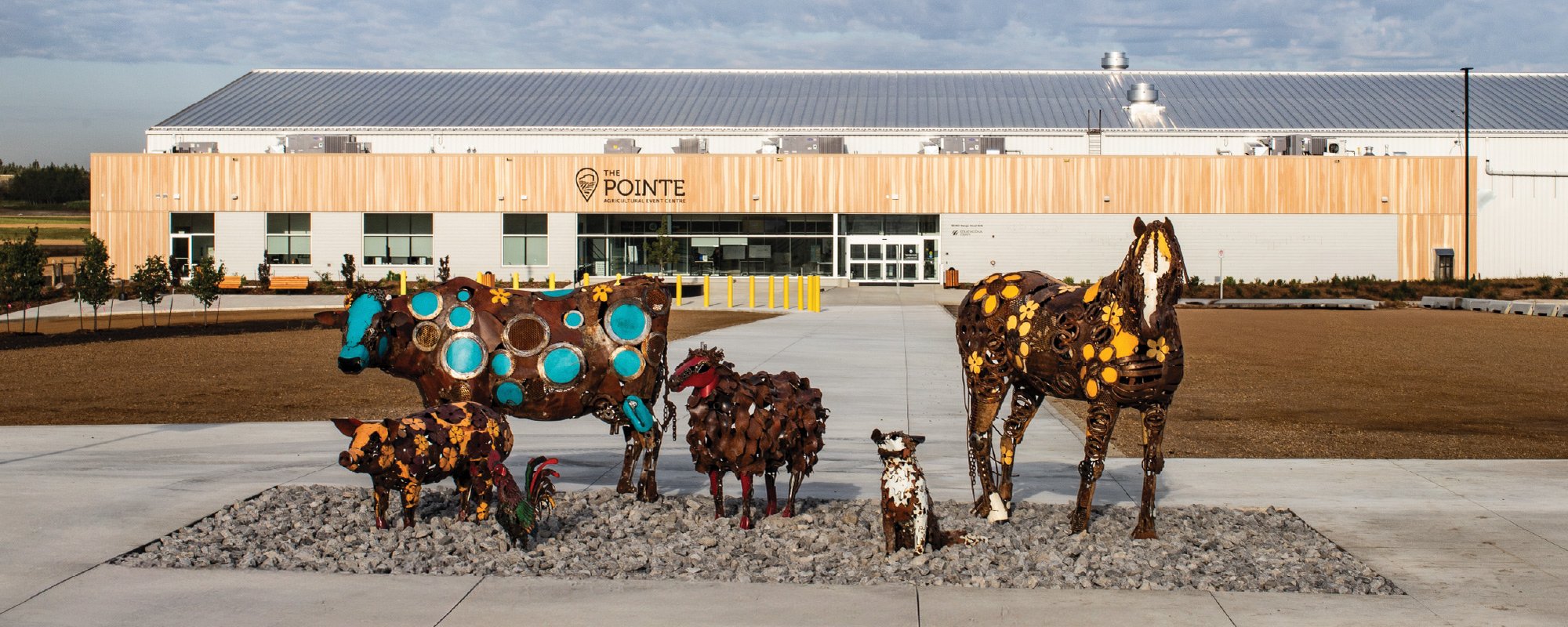
Public art at The Pointe Agricultural Event Centre, Pointe-aux-Pins Acres
A gathering of land, memory and imagination
Public art at The Pointe celebrates connection to place and one another. Rooted in Strathcona County’s landscape and cultural histories, these commissions invite visitors to experience the site as a living, evolving ecosystem. Here, sculpture, ecology, memory and imagination intersect to inspire reflection, relationship and renewal.
Each project reflects the site’s agricultural legacy while opening space for future stories to unfold.
Among Friends - Cedar Mueller
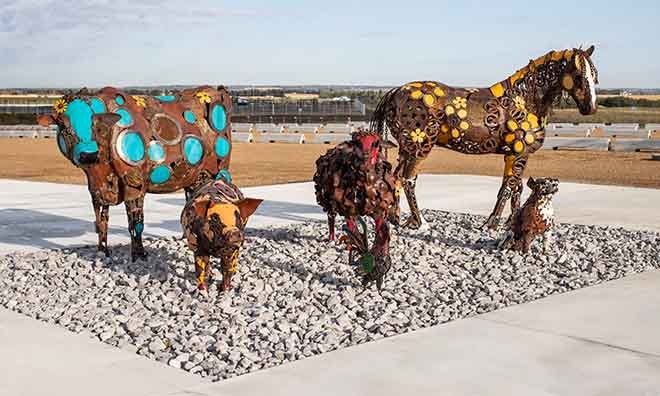
A horse, cow, pig, sheep, dog and rooster, life-sized and full of personality, stand together in a sculptural gathering crafted from salvaged farm machinery and weathered metal. With rusted patinas and expressive stances, Among Friends honours the timeless companionship between humans and animals.
Rooted in the concept of companion species, the work speaks to cross-species care and cohabitation. As visitors arrive, these creatures offer a warm welcome and a celebration of rural resilience, shared histories and the spirit of the land.
About the artist
Cedar Mueller is a rural Alberta-based artist working with reclaimed metal to create sculptures that explore land, labour and animal kinship. Her public artworks often emerge from materials with history, infusing memory into form and crafting vibrant gestures of environmental storytelling.
The Pointe - Red Knot Studio
Glass mosaic Installation on front facade of building | Flow wall: Pointe-aux-Pins Creek
Spring 2026 installation
Flowing across 18 sculptural panels, The Pointe traces the journey of Pointe-aux-Pins Creek from the Beaver Hills to the North Saskatchewan River. With layered greens, blues and earth tones, this shimmering mosaic evokes the creek’s movement as a vital artery through the land.
Suspended from the building’s facade, the panels shift with light and shadow, echoing water’s rhythm. The work references the watershed’s topography, French-rooted name and enduring relationship to the region.
About the artists
Red Knot Studio, founded by Erin Pankratz and Christian Pérès Gibaut, is known for tactile, joyful mosaics crafted by hand. Their collaborative practice embraces tradition, colour and craft, bringing movement and wonder to public spaces across Canada.
Art plots - outdoor eco-art installations
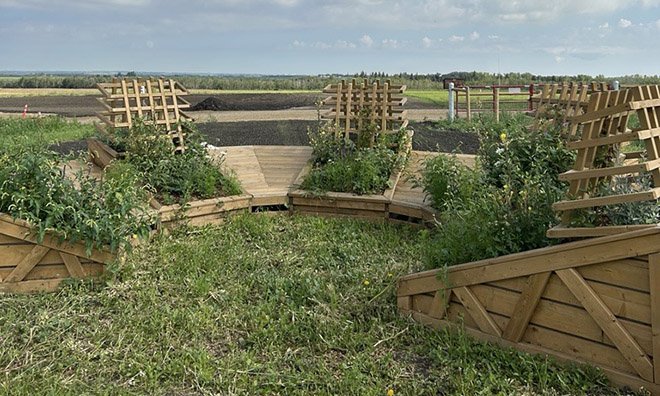
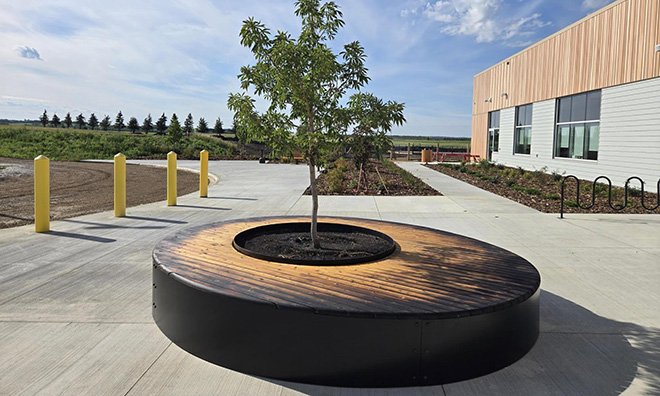
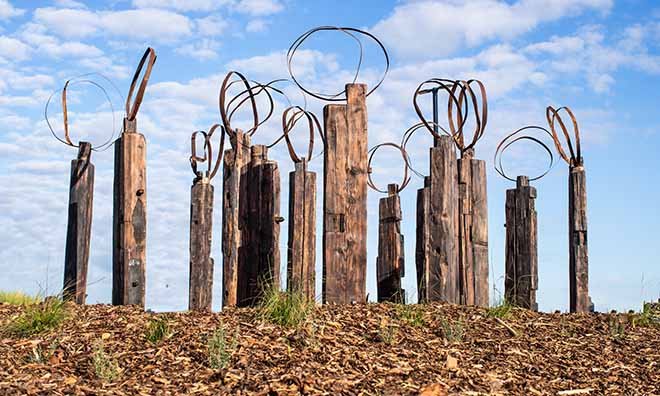
Dispersed across the grounds of Pointe-aux-Pins Acres, three unique art plots invite visitors into sensory encounters with the landscape. Each installation responds to ecology, seasonality and interspecies presence.
- The Grand Prairie Altar - Justin Tyler Tate
A sculptural earthwork filled with perennial plants, this living altar becomes a refuge for pollinators and a seed-dispersal site for future restoration. It is both a contemplative sanctuary and a hopeful gesture toward ecological repair. - The Pebble - Carlos Portillo
This charred wood platform, shaped like a giant pebble, offers rest for humans and insects alike. At its heart, a tree and butterfly garden nourish pollinators, creating a harmonious microhabitat of stillness and life. - The Gathering - Paddy Lamb
Constructed from salvaged wood and metal, these sculptural sentinels reflect the layered heritage of the Beaver Hills. The work acknowledges acts of gathering materials, memory and story, and reflects the land’s long history of human connection.
About the Artists:
- Justin Tyler Tate is an international artist blending sculpture and permaculture into regenerative art.
- Carlos Portillo explores minimal, multispecies design with ecological intent.
- Paddy Lamb is an Irish-born, Strathcona County-based artist whose practice weaves land, memory and history into evocative installations.
Historical photographic display
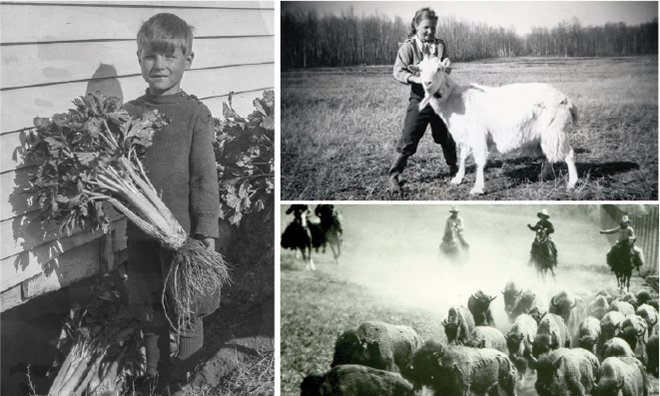
Inside the building, seven archival photographs from the Strathcona County Museum and Archives and the Provincial Archives of Alberta reveal the lives and labour of early settlers in the region. These black-and-white images, framed across interior surfaces, reference generations of agricultural practice and community life.
This installation is a quiet reflection on time, place and the enduring relationship between people and the land. It reminds us that the stories we inherit still shape the spaces we gather in today.